Over the past year, I’ve tested more AI marketing tools than I can count.
Writers. Image generators. SEO assistants. Ad managers. Chatbots. Scrapers.
And here’s the uncomfortable truth: most marketing teams aren’t missing tools.
They’re drowning in them.
Open your browser and you’ll see it. Research in one tab. Writing in another. Design somewhere else. SEO dashboards. Analytics logins. AI didn’t remove friction - it just spread it across more apps.
The old workflow looked like this:
Copy. Paste. Re-prompt. Export. Upload. Repeat.
In 2026, that model is dying.
The real shift isn’t:
AI tools → more AI tools
It’s:
AI tools → AI workflows
Prompting → orchestration
Content production → campaign automation
If you're searching for the best AI marketing tools in 2026, you don’t just need a list. You need to understand where each tool fits inside your marketing system.
The teams winning right now aren’t stacking software. They’re building connected systems where research, strategy, creative, and optimization flow together.
Before choosing tools, you need to understand what a modern AI marketing stack actually looks like.
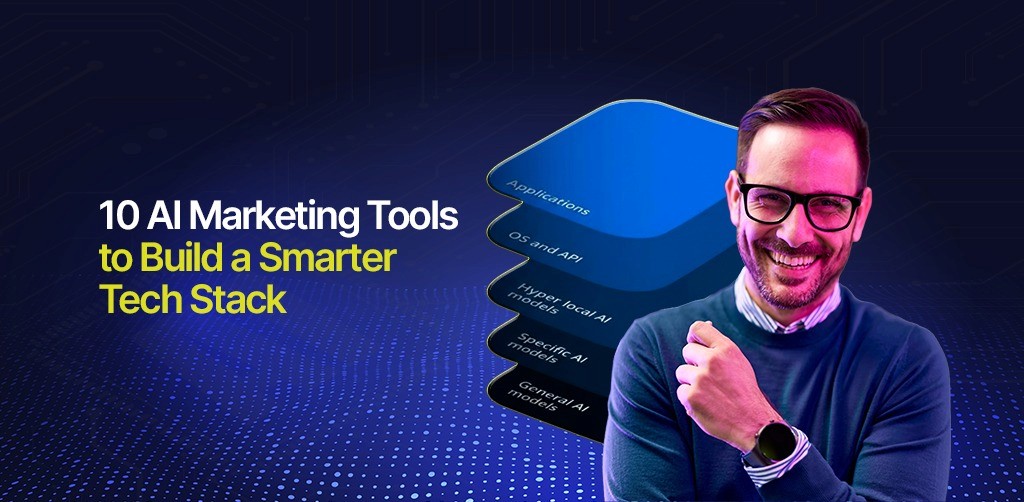
What an AI-Native Marketing Tech Stack Looks Like in 2026
Most people picture a stack as a tool list.
That’s wrong.
A real AI-native stack is layered architecture.
Each layer has a job.
Each layer feeds the next.
And the magic happens in the connections.
Here’s how it actually works.
Layer 1: Research & Intelligence
This is your signal engine.
If this layer is weak, everything above it is guesswork.
This layer answers:
What does the market want?
What are competitors doing?
What messaging is already saturated?
Where is demand forming?
What language does the audience actually use?
What Lives Here
Market analysis tools
Competitor scraping systems
Social listening
Keyword and search trend analysis
Review mining
Data aggregation
Why This Layer Matters in 2026
AI made content cheap.
Signals are now expensive.
Most teams still create content first and research second.
Winning teams reverse it.
They use AI to extract:
Pattern clusters
Emotional triggers
Objection signals
Intent data
Research is no longer a spreadsheet.
It’s an input engine.
Layer 2: Strategy & Orchestration
This is your brain layer.
This is where most stacks break.
Because teams use AI tools - but they don’t coordinate them.
What This Layer Actually Does
Connects research to campaign architecture
Routes outputs between models
Maintains context across assets
Builds repeatable workflows
Controls execution logic
This layer turns: “Write 5 blog posts” Into “Run an SEO-informed, persona-targeted, multi-format campaign system.”
Key Capabilities
Workflow automation
Cross-model coordination
Context retention
Campaign logic mapping
Visual planning systems
Without this layer, tools stay siloed.
With it, they compound.
Layer 3: Asset Production
This is your creative engine.
This is where most marketers stop.
AI writing.
AI images.
AI video.
But production is only powerful if it’s informed and orchestrated.
What Lives Here
Long-form content generation
Ad copy production
Image generation
Video creation
Landing page copy
Email sequences
Multi-format repurposing
In 2026, asset production is:
Multi-modal
Persona-specific
Channel-adapted
One idea → 12 asset formats → distributed automatically.
The future isn’t “write a blog.”
It’s “deploy a campaign ecosystem.”
Layer 4: Distribution & Optimization
This is your amplification engine.
Content without distribution is invisible.
This layer pushes assets into channels and adjusts based on performance.
What Lives Here
Paid ads management
Email automation
Social publishing
SEO optimization
Conversion rate optimization
Chatbots
In older stacks, distribution was manual.
In modern stacks, it’s responsive.
Performance data feeds back into the system.
Ad headlines update.
Landing pages adjust.
Email subject lines evolve.
Optimization is continuous.
Layer 5: Data & Feedback Loops
This is your memory layer.
This layer determines whether your system gets smarter or repeats mistakes.
What Lives Here
CRM integration
Performance dashboards
Attribution models
Revenue tracking
Audience behavior signals
Iteration systems
This layer answers:
What actually converted?
Which persona performed best?
Which channel drives revenue?
Where are we wasting spend?
Most marketers track clicks.
Winning teams track compounding intelligence.
Data isn’t reporting.
It’s refinement fuel.
The Real Insight
Most AI tools solve a task.
Modern stacks solve a system.
The advantage in 2026 doesn’t come from producing more content.
It comes from connecting research, strategy, production, and optimization into one continuous flow.
Architecture compounds.
Apps don’t.
The Top 10 AI Marketing Tools to Build Your Stack in 2026
Now we place tools inside this layered model.
Not randomly.
Intentionally.
1. DFIRST AI (Best AI Marketing Orchestration Platform)
Layer: Research & Intelligence / Strategy & Orchestration / Asset Production
Primary Role in Stack: Orchestration engine
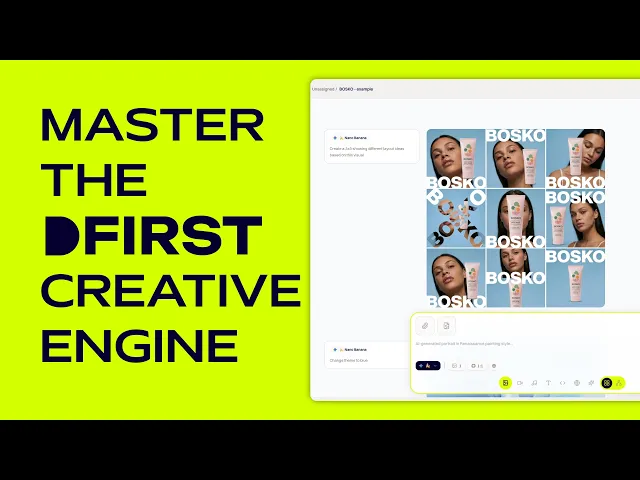
DFIRST is a visual, workflow-based AI platform designed to unify research, strategy, and content production inside a single canvas.
Instead of jumping between isolated tools, teams build connected campaign systems using multiple AI models in coordinated flows. It acts as the orchestration layer that ties the entire marketing stack together.
Most AI tools operate in one layer.
DFIRST connects layers.
That structural difference changes how campaigns are built.
What It Actually Solves
Most teams today operate like this:
One tool for research
Another for SEO
Another for writing
Another for image generation
Another for automation
The result: Endless back-and-forth between apps, repeating the same copy → paste → re-prompt → export → upload cycle.
DFIRST centralizes this inside one visual workflow.
Instead of disconnected actions, you build:
Research Node → Strategy Node → Content Node → Ad Variations → Channel Outputs
All connected.
All contextual.
All reusable.
This cross-layer integration is what makes it structurally different from single-function tools.
Core Features
Visual Canvas (node-based workflows)
Built-in research + scrapers
50+ AI models (GPT, Claude, Gemini, DALL·E, Stable Diffusion, etc.)
Data Room for brand memory
Context continuity across nodes
Campaign whiteboards
Reusable workflows
Key Features I Liked
True cross-model orchestration (not just AI prompting)
Persistent brand memory reduces re-explaining context
Visual logic flows make complex campaigns easier to manage
Reusable workflows turn campaigns into systems
Reduces context loss between tools
Who It’s For
Agencies
Performance marketers
AI-native teams
Teams tired of switching between 7 tools
Why It Changes the Stack Game
Fewer subscriptions
Less context loss
Faster campaign builds
Reusable systems
This is orchestration, not tool stacking.
Pricing
Offers Starter, Pro, and Enterprise tiers based on:
Number of workflows
Model credits usage
Collaboration features
Free/Starter plan available.
2. Jasper (Best AI Writer for Structured Content Teams)
Layer: Asset Production
Primary Role in Stack: Long-form content engine
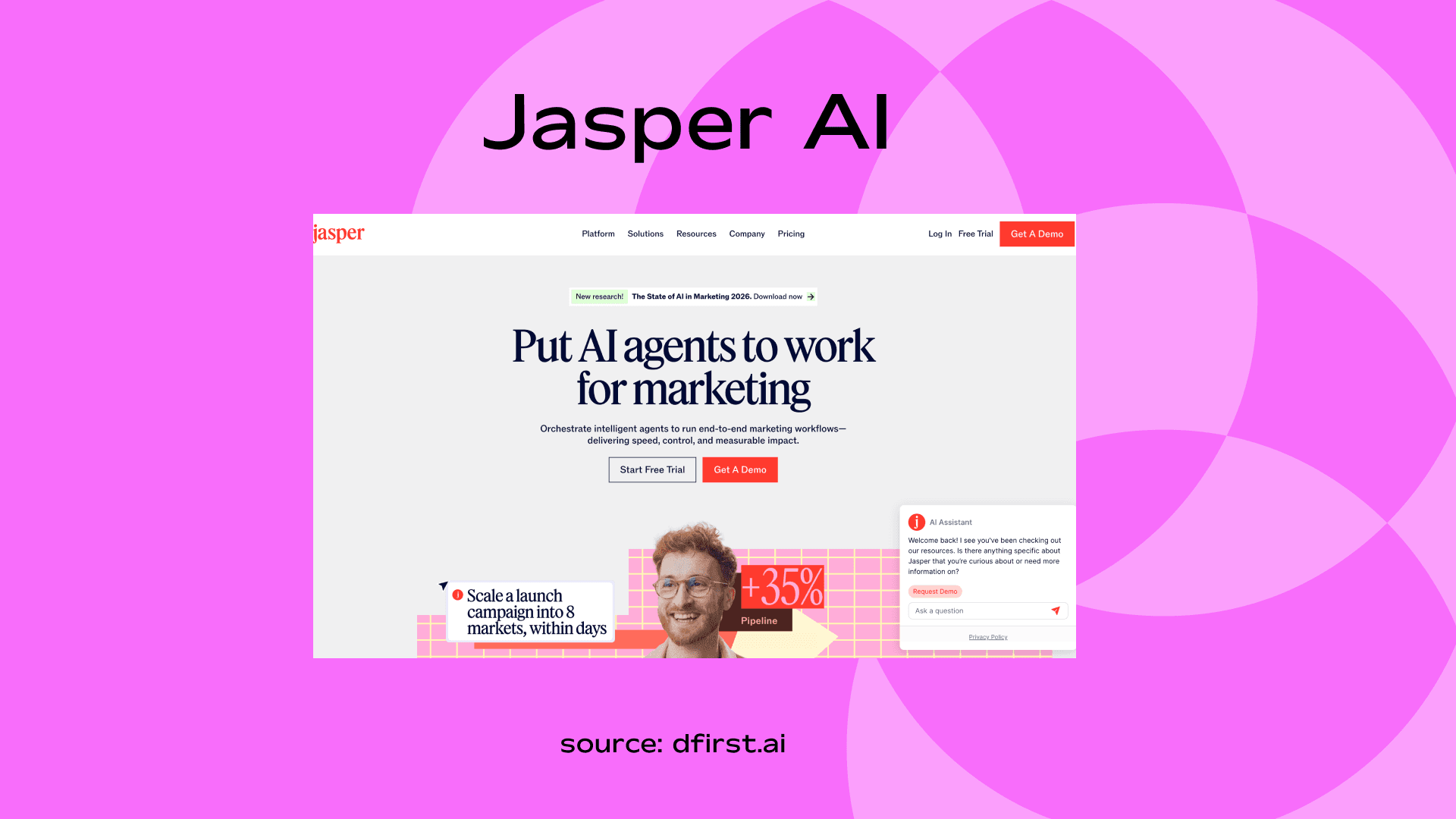
Jasper is an AI writing platform built for structured marketing teams that prioritize brand voice consistency and scalable blog production.
Key Features I Liked:
Brand voice settings
Content templates (blogs, ads, emails)
Collaboration + user roles
SEO integrations
Rewrite and expand features
It works well in companies that already have strategy defined elsewhere.
Best For: Teams producing frequent long-form articles, guides, and branded content.
Pricing: Tiered monthly plans based on word count and features. Free trial available.
What People Say:
"Jasper has the potential to fundamentally transform the way marketing teams operate by boosting efficiency, accelerating execution, and delivering high-quality campaigns faster"
Bryan Olshock
Chief Marketing Officer
Service Titan
3. Surfer SEO (Best AI Tool for SEO Optimization)
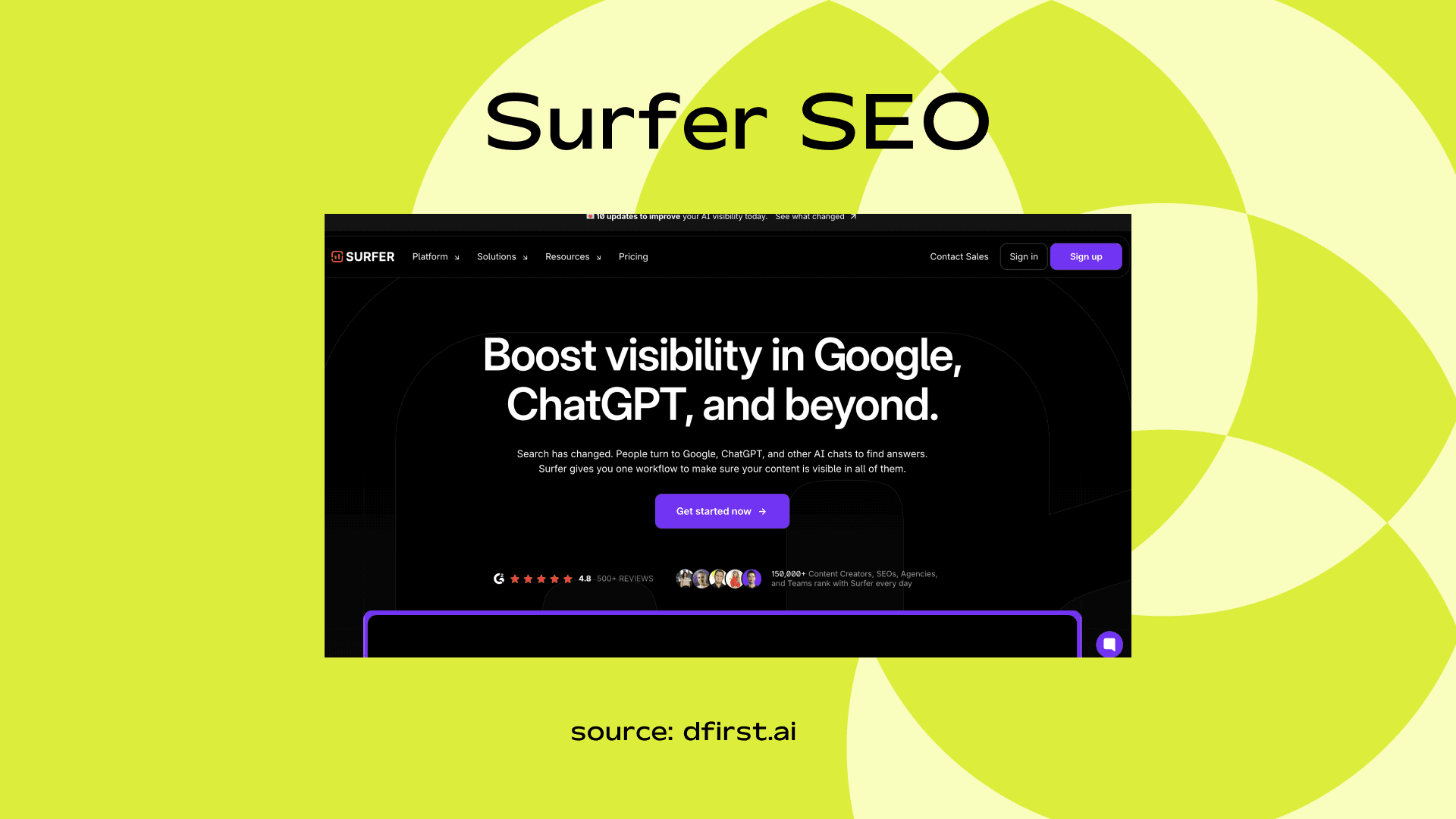
Layer: Distribution & Optimization
Primary Role in Stack: Organic search performance optimizer
Surfer SEO is an AI-assisted optimization platform that analyzes top-ranking pages and recommends structural and keyword improvements to increase organic visibility.
Key Features I Liked:
Content scoring vs competitors
Keyword research suggestions
SERP analysis insights
SEO-driven outline generator
Integrations with Google Docs/WordPress
It strengthens content performance after production rather than replacing strategy or writing tools.
Best For: Content teams focused on improving SERP rankings and organic search efficiency.
Pricing: Monthly subscription with multiple tiers based on query limits and features. Free trial available.
What People Say:
“Surfer has righteously earned its place in our content team’s tool arsenal. We use it daily and can wholeheartedly recommend trying it.”"
Jete Laager
Content and Localisation Lead
Bolt Technology
4. HubSpot AI (Best AI-Powered CRM & Marketing Hub)
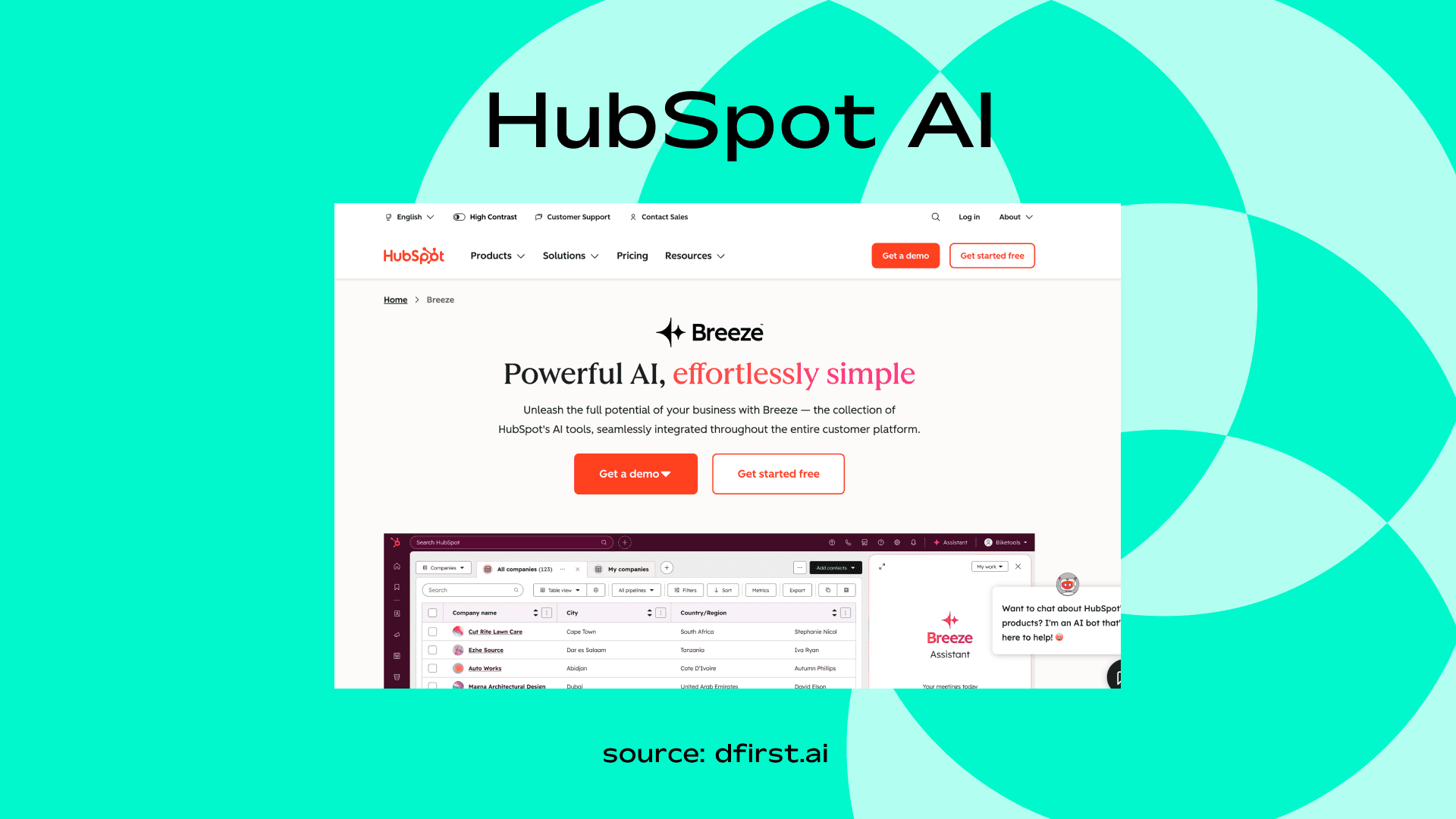
Layer: Data & Feedback Loops
Primary Role in Stack: CRM and lifecycle intelligence
HubSpot AI enhances its CRM + automation ecosystem with AI-powered personalization, predictive analytics, and campaign performance tracking.
Key Features I Liked:
Central CRM database
Email automation sequences
Lead scoring
AI-powered subject line and content suggestions
Attribution reporting
It connects marketing activity to actual revenue outcomes.
Best For: Mid-sized companies that rely on CRM to unify sales and marketing insights.
Pricing: Free tier + paid plans (Starter/Professional/Enterprise). Pricing scales based on contacts and features.
What People Say:
“Breeze can help our customers get information faster and with more consistency. It’s about improving efficiency without removing the human touch. Making sure customers get what they need, when they need it.”
Jennifer Cummings
Senior Director, Customer Engagement
Kaplan Early Learning Company
5. Tidio (Best for Conversion Optimization)
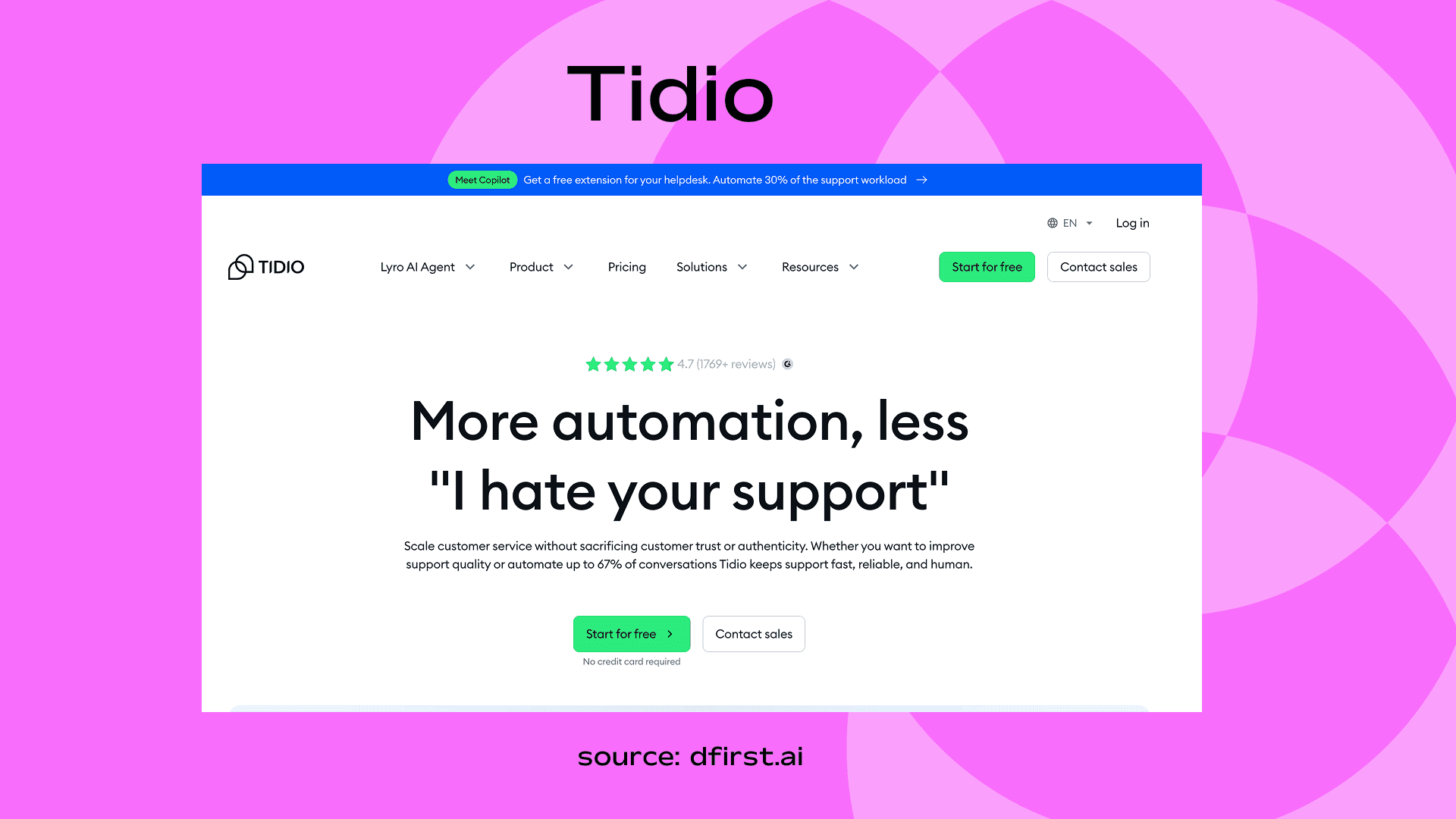
Layer: Distribution & Optimization
Primary Role in Stack: On-site conversion enhancer
Tidio provides AI chatbots and live chat systems that improve engagement, capture leads, and guide visitors toward conversion.
Key Features I Liked:
Custom chatbot flows
Lead capture + segmentation
Ecommerce integrations
Live chat + bot hybrid
Automated follow-ups
It strengthens bottom-of-funnel performance without increasing support workload.
Best For: Ecommerce brands and SaaS companies looking to improve conversions without manual support.
Pricing: Free plan with basic chatbot + paid tiers for automation and advanced AI responses.
What People Say:
"We chose Tidio because it allows us to interact with our customers in real time. This immediate interaction enhances our customer service for website visitors, resulting in increased sales.”
Isabella Wålinder Isovic
Inbound Marketing Specialist
Beltton
6. Adzooma (Best for Paid Media Optimization)
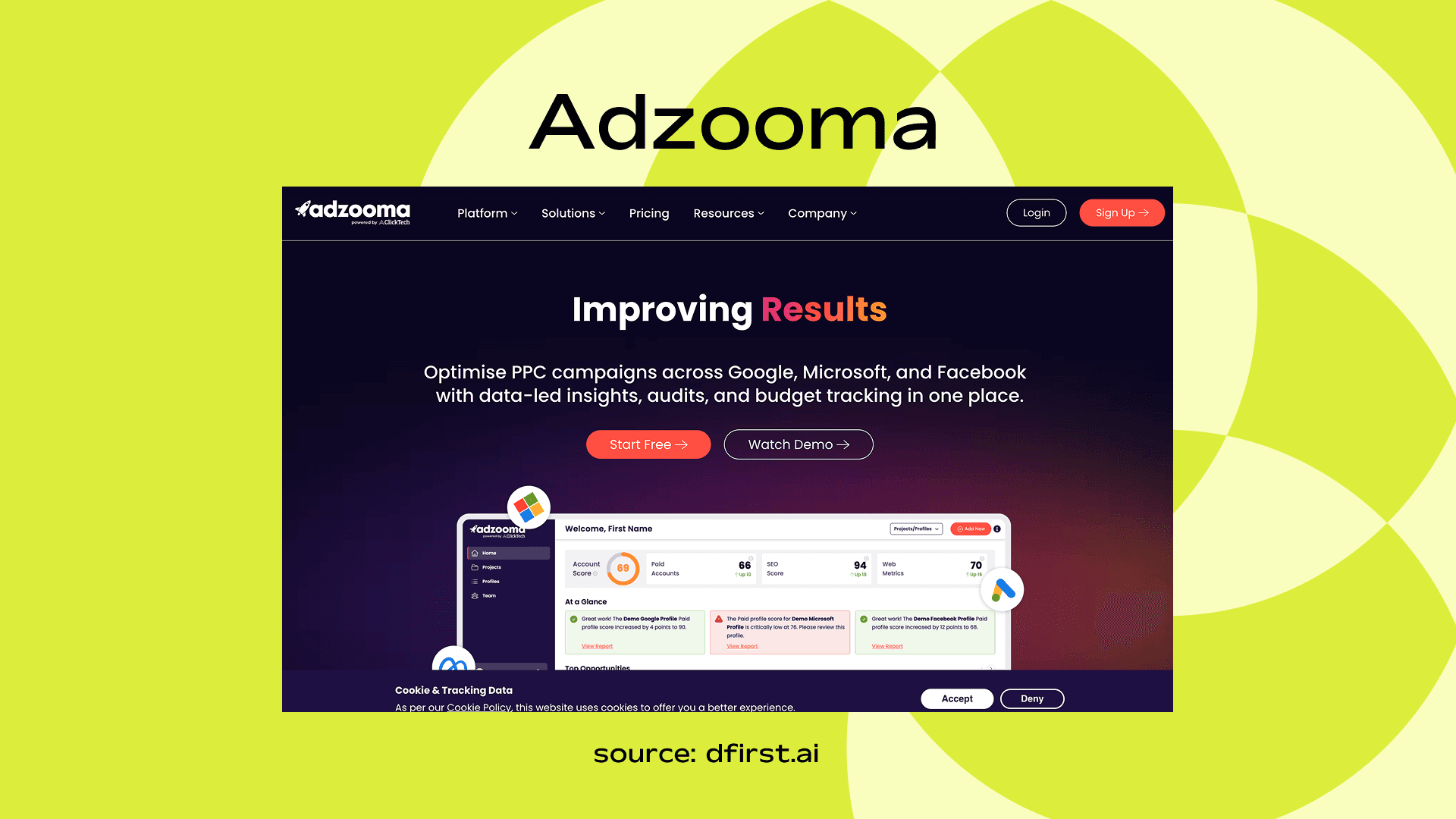
Layer: Distribution & Optimization
Primary Role in Stack: Paid ads efficiency tool
Adzooma helps manage and optimize paid campaigns across Google, Facebook, and Microsoft Ads using AI-driven performance recommendations.
Key Features I Liked:
Automated performance suggestions
Budget reallocations based on results
Cross-platform campaign view
A/B insights and alerts
It simplifies paid ad monitoring and optimization.
Best For: Agencies and performance marketers managing multiple PPC accounts.
Pricing: Free plan + paid tiers based on account count and features.
What People Say:
"Having a clear overview of my campaigns on Adzooma is so much better than viewing it on Google Ads. The automation really makes it stand out"
Jorge Edel Aguilar
CEO
Veeme Media
7. GrowthBar (Best Lightweight SEO + AI Combo)
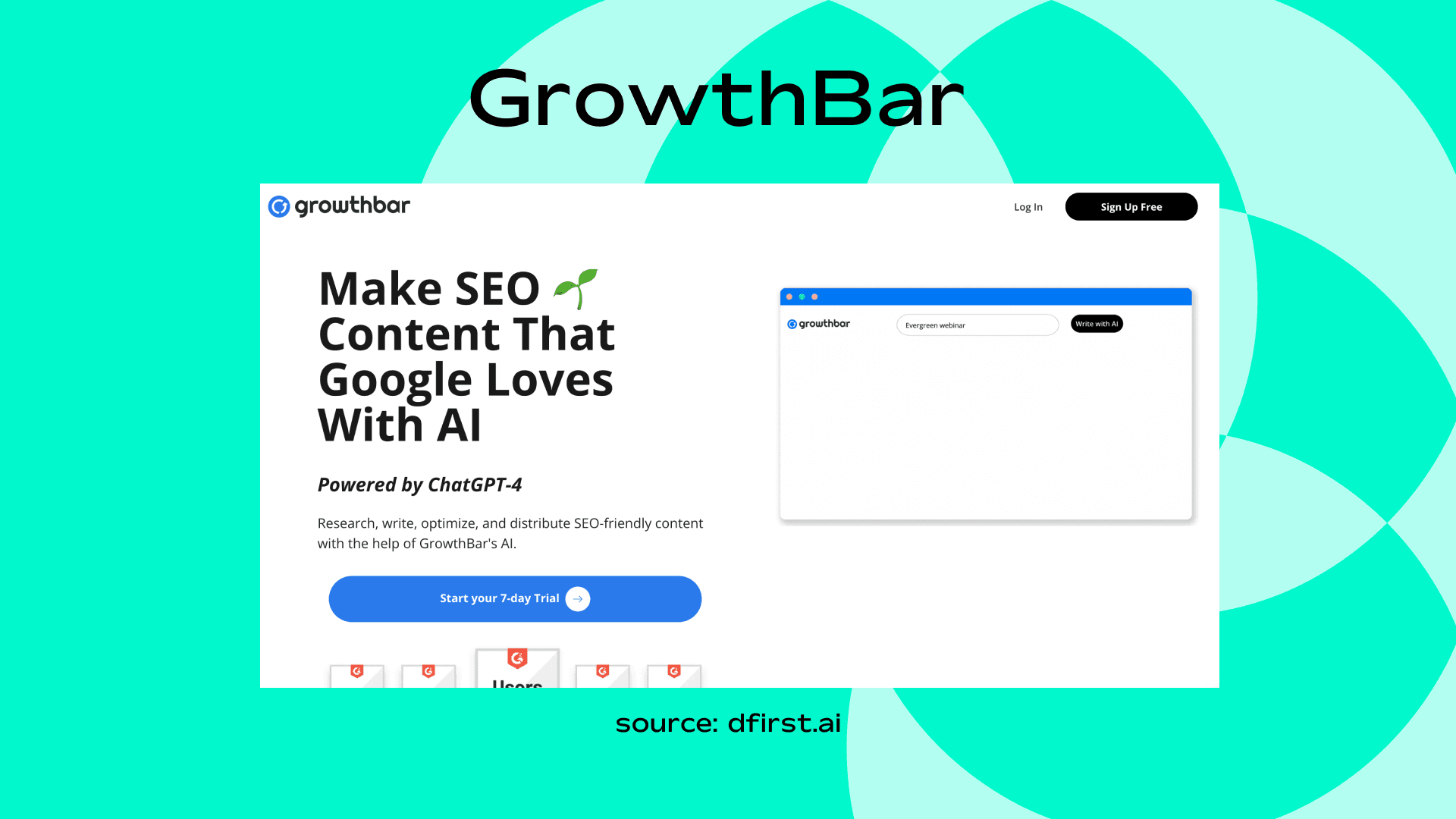
Layer: Research & Intelligence / Asset Production
Primary Role in Stack: SEO-assisted content creation
GrowthBar combines keyword research and AI writing in a streamlined interface designed for lean marketing workflows.
Key Features I Liked:
Keyword explorer
AI content generation
Competitor analytics
Rank tracking
It supports both research and production in lightweight setups.
Best For: Solo founders, freelancers, and lean teams needing simple SEO + AI writing in one place.
Pricing: Subscription plans with usage limits. Free trial available.
What People Say:
"GrowthBar has helped us break into new SEO categories and write content faster. I use the Content Generator almost daily."
Mark Sandusky
Agency Owner
Peer Through Media
8. Pictory (Best for Content Repurposing)
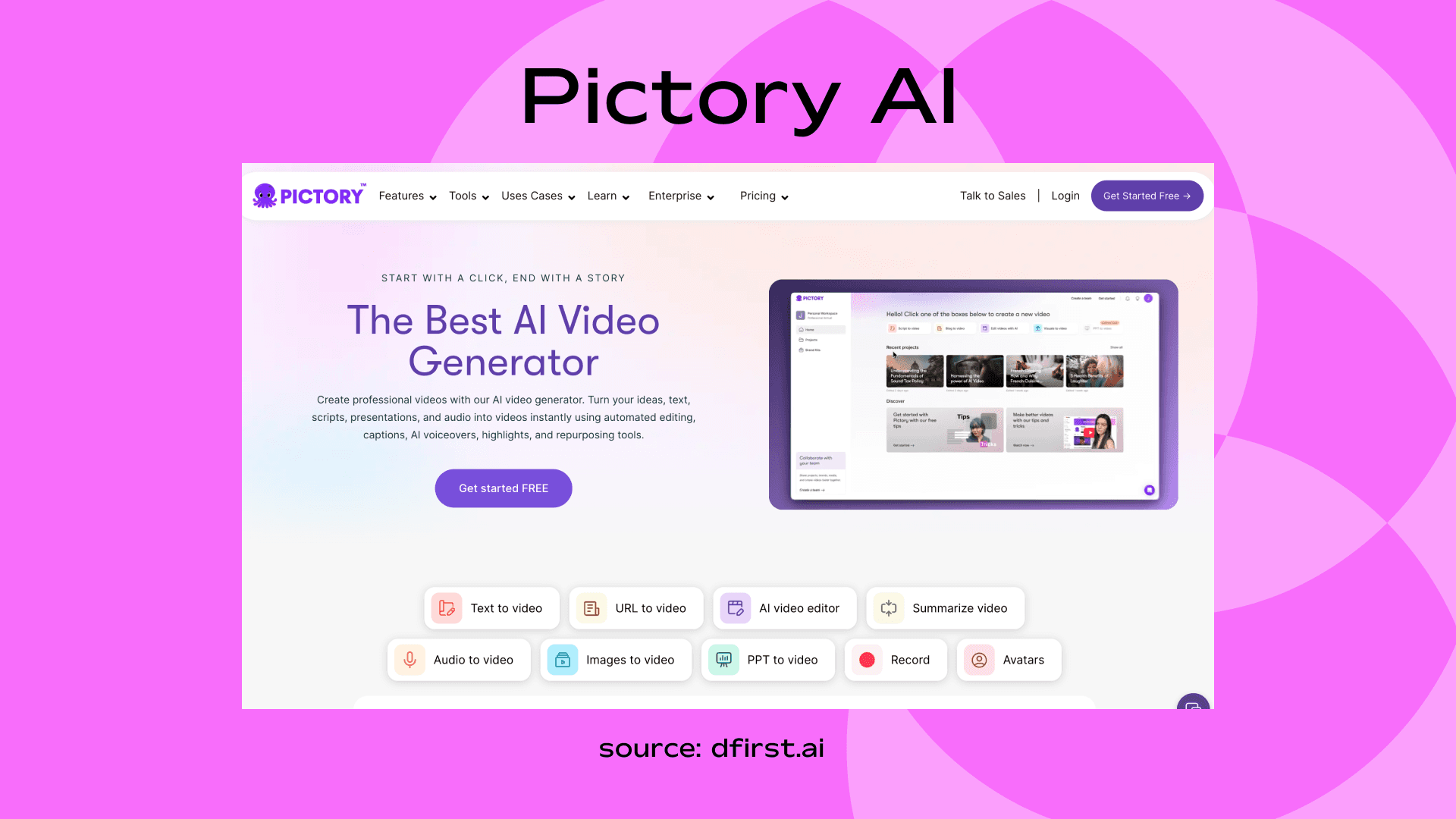
Layer: Asset Production
Primary Role in Stack: Content-to-video converter
Pictory transforms written or recorded long-form content (blogs, webinars) into short, shareable video clips with captions, visuals, and pacing automation.
Key Features I Liked:
Text-to-video conversions
Auto captioning
Templates for social formats
Custom branding
It extends written assets into visual formats.
Best For: Teams repurposing written content into engaging video formats for social platforms.
Pricing: Tiered monthly pricing based on export quality and minutes of video.
What People Say:
"With Pictory, I don’t need a marketing company anymore. I’m getting views on YouTube and inbound business by explaining complex concepts clearly."
Dr. Malcolm J.
AI Integration Consultant
9. Grammarly (Best AI Editing Assistant)
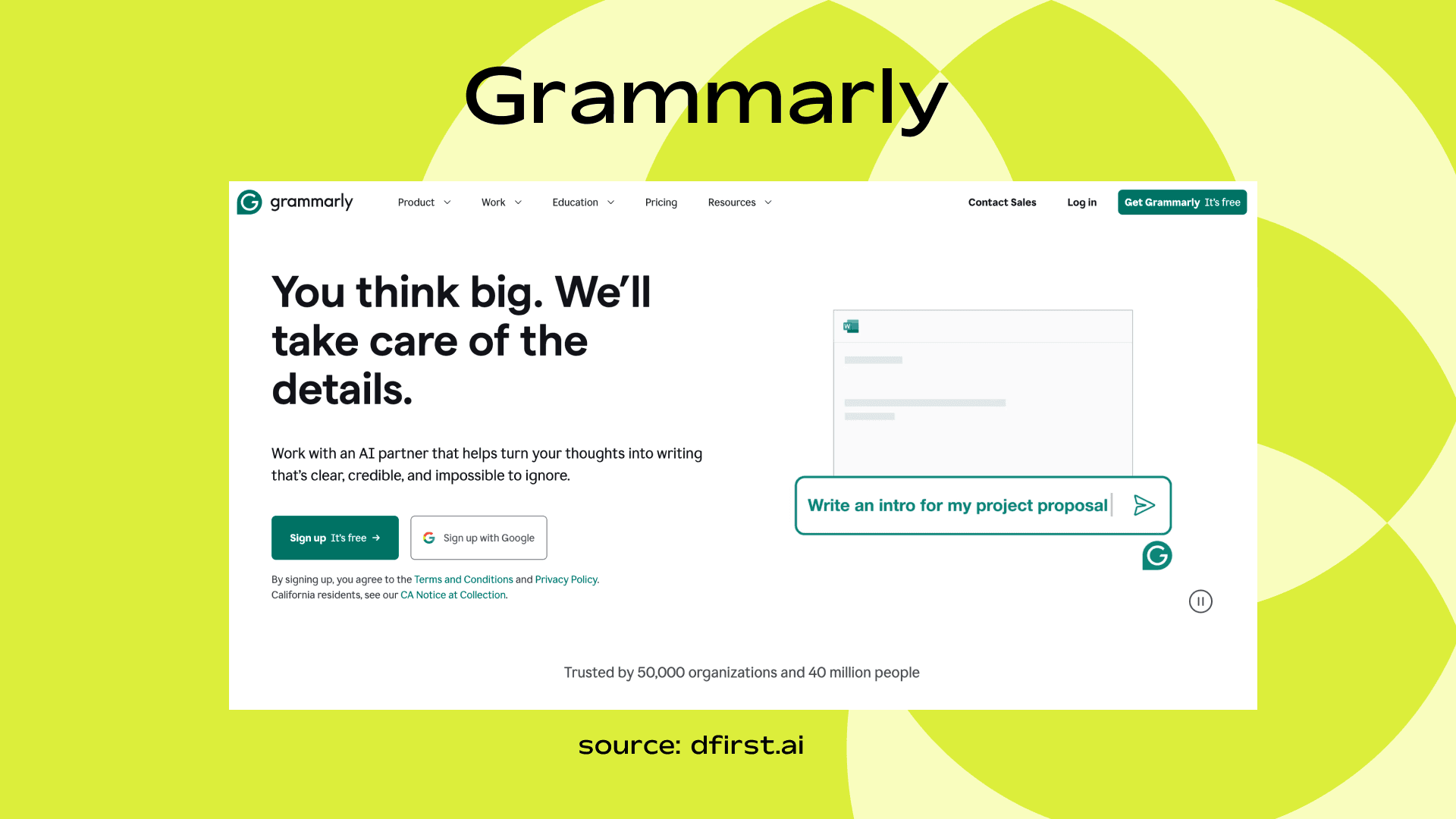
Layer: Asset Production/Refinement
Primary Role in Stack: Content refinement and clarity
Grammarly improves grammar, tone, clarity, and readability across written marketing materials.
Key Features I Liked:
Grammar and spelling correction
Tone detection
Clarity suggestions
Integration with browsers and apps
It acts as a quality safeguard before publishing.
Best For: Any team that publishes written content at scale.
Pricing: Free basic plan + Premium plan for advanced features.
What People Say:
"Grammarly is a dream for our engineering teams. We’ve reclaimed over 20 days annually per user that was previously spent on manual editing and rewriting."
Mihai Fonoage
VP of Engineering
Smartsheet
10. Otter.ai (Best for Internal Intelligence)
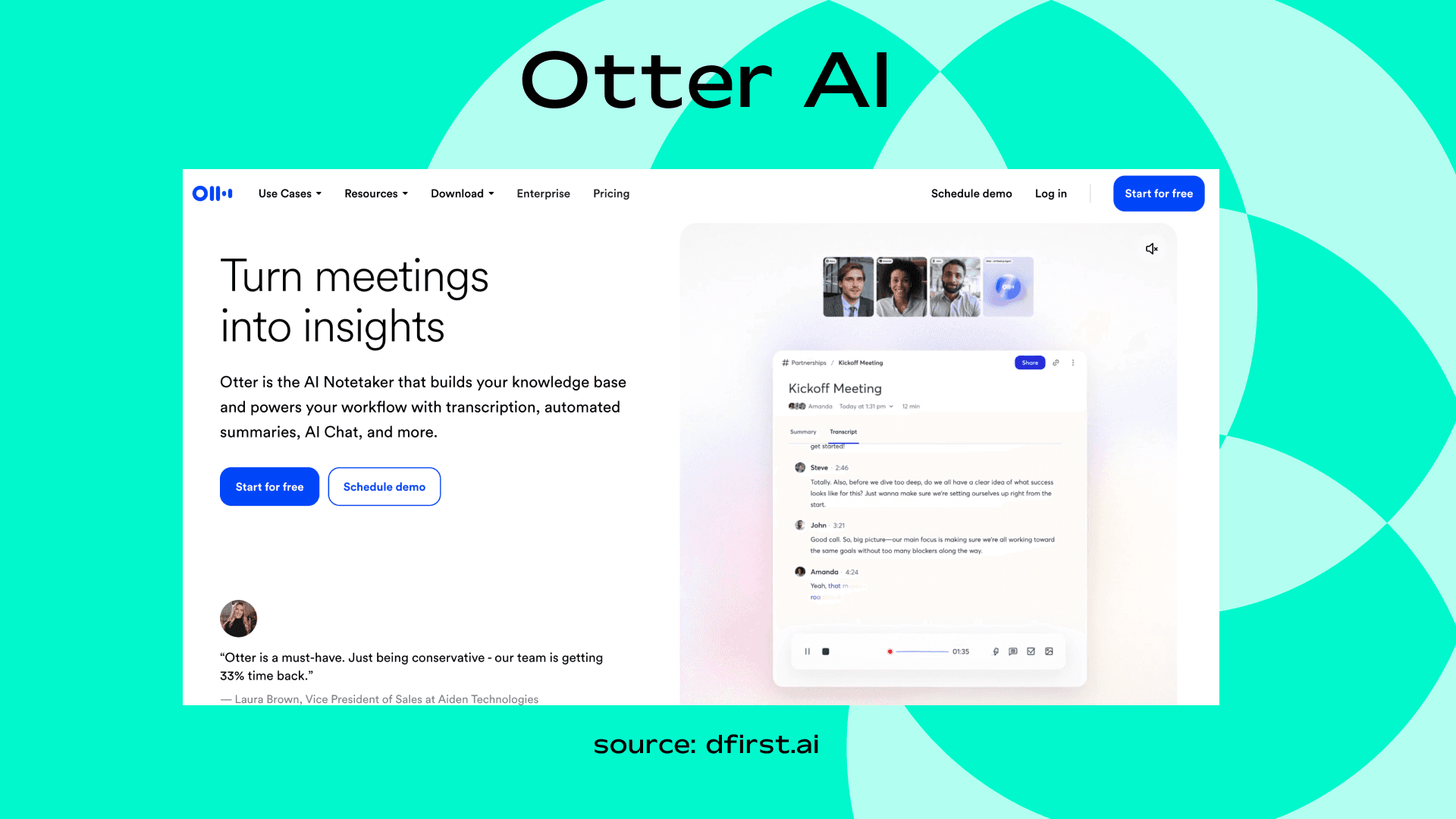
Layer: Research & Internal Data
Primary Role in Stack: Meeting insight capture
Otter.ai transcribes calls and meetings with searchable transcripts, summaries, and action item extraction - turning spoken insights into research assets.
Key Features I Liked:
Live transcription
Summaries and highlights
Shareable notes
Keyword search
It converts conversations into structured strategic inputs.
Best For: Teams relying on frequent meetings, client calls, and strategy sessions as data sources.
Pricing: Free plan + paid options for minutes and features.
What People Say:
"We achieved $150,000 in annual savings by using Otter AI Chat to automate our implementation notes from over 1,000 captured calls."
Nicole Hanson
Marketing Director
Asset Panda
What Most Marketers Get Wrong About AI Tools in 2026
AI didn’t make marketing simpler.
It made bad systems scale faster.
In 2026, the gap isn’t between teams using AI and teams not using AI.
It’s between teams using AI tactically…
and teams using AI structurally.
Here’s where most marketers still get it wrong:
1. They Buy Tools Instead of Building Systems
Most teams treat AI like shopping.
New tool launches → sign up.
New feature drops → test it.
New model releases → switch platforms.
Six months later, they’re juggling:
3 writing tools
2 SEO dashboards
4 automation platforms
5 disconnected subscriptions
Nothing talks to each other.
A system asks:
Where does research live?
How does strategy flow into production?
How does performance feed back into iteration?
Tools complete tasks.
Systems produce outcomes.
Small change - sharper delivery.
2. They Use AI as a Writer, Not as an Operator
Most marketers still use AI like this:
“Write me a blog post.”
“Create 10 ad variations.”
“Summarize this article.”
That’s replacement thinking.
High-performing teams use AI as an operator:
Scrape competitors
Analyze SERPs
Extract patterns
Build positioning angles
Generate multi-format assets
Auto-create distribution workflows
Instead of:
AI → content generator
They think:
AI → campaign engine
The shift is subtle but massive.
AI as a writer saves hours.
AI as an operator multiplies output.
3. They Don’t Connect Research to Asset Creation
This is the quiet productivity killer.
Research happens in one tab.
Strategy in a Notion doc.
Content in a writing tool.
Design in another app.
Ads in a separate dashboard.
Context gets lost every time you switch platforms.
What happens?
Messaging drifts
Angles weaken
Data insights disappear
Campaigns feel generic
In AI-native stacks, research flows directly into production.
Competitor data informs:
Headlines
Offers
Hooks
Creative direction
There’s continuity.
Disconnected workflows create disconnected messaging.
4. They Ignore First-Party Data
AI tools are powerful.
But generic AI outputs are becoming commoditized.
The real edge in 2026?
First-party data.
CRM insights
Customer objections
Sales call transcripts
Email engagement signals
Conversion data
Most marketers feed AI public internet data.
Few feed it proprietary intelligence.
The difference shows.
Generic prompts produce average content.
First-party-informed workflows produce conversion-driven campaigns.
The future belongs to teams that integrate:
AI + internal data + feedback loops.
5. They Optimize Outputs, Not Workflows
This is the biggest blind spot.
Marketers obsess over:
Better copy
Better headlines
Better creatives
Better targeting
But ignore:
How long campaigns take to build
How many manual steps exist
Where friction happens
Where context resets
Improving output quality by 10% is nice.
Reducing campaign production time by 70% changes everything.
Workflow optimization compounds.
Output optimization plateaus.
The winning mindset in 2026:
Don’t just improve what you create.
Improve how creation happens.
If I Had to Build an AI Marketing Stack From Scratch Today
No legacy tools.
No sunk costs.
No “we’ve always used this.”
If I had to build an AI marketing stack from zero in 2026, here’s exactly how I’d do it.
Not theoretical.
Practical.
Budget-aware.
System-first.
Step 1: Start With Orchestration - Not Content Tools
Most people begin with a writer.
I wouldn’t.
I’d start with an orchestration layer like DFIRST AI.
Why?
Because research, strategy, and asset production need to live in the same system.
If the foundation is fragmented, everything built on top stays fragmented.
Budget allocation: $80–$120/month
Goal:
Central workflow canvas
Research + scraping
Multi-model access
Reusable campaign templates
I want one place where campaigns are built - not 7 tabs.
Step 2: Add Search Intelligence (Only If SEO Is a Channel)
If organic traffic matters, I’d add Surfer SEO.
But I wouldn’t use it as a writing tool.
I’d use it strictly as:
SERP analyzer
Content structure validator
Optimization checkpoint
Budget allocation: $89–$129/month
What I would not do:
Write content directly inside Surfer
Let optimization dictate positioning
Obsess over content scores
SEO should refine strategy - not control it.
Step 3: Add CRM + Data Layer (When Revenue Becomes Real)
Once leads start flowing, I’d integrate HubSpot.
Not on day one.
Only when:
You need attribution
You’re running multiple campaigns
You care about lifecycle automation
Budget allocation: $50–$800/month (depending on scale)
The mistake founders make?
Buying enterprise CRM before product-market fit.
Data systems should follow traction - not precede it.
Step 4: Add Conversion Layer
If traffic is already coming in, I’d plug in Tidio for:
AI chat automation
Lead capture
FAQ handling
Basic CRO support
Budget allocation: Free → $29/month
This layer increases revenue without increasing traffic.
Always cheaper to improve conversion than to buy more clicks.
Step 5: Paid Media Layer (Only After Workflow Is Stable)
For paid campaigns, I’d use Adzooma to manage optimization and reporting.
But only after:
Messaging angles are validated
Landing pages convert
Creative production is repeatable
Budget allocation: $69–$179/month
Scaling broken funnels is expensive.
Fix systems first. Scale second.
What I Would Ignore Completely (At the Beginning)
This is important.
Here’s what I wouldn’t buy early:
5 different AI writing tools
Premium design subscriptions
Enterprise automation platforms
Advanced BI dashboards
“All-in-one” lifetime deals
I would ignore:
Feature depth
Tool hype
Model comparisons
And focus on:
Reusability
Data continuity
Speed of execution
My Lean Starter Stack (Under $250/month)
If I had to keep it tight:
Orchestration layer (DFIRST AI Starter)
Surfer SEO (if SEO-focused)
Tidio (free or basic)
Grammarly (free tier)
That’s enough to:
Research competitors
Build campaigns
Produce assets
Optimize for search
Capture leads
Improve quality
You don’t need 15 tools.
You need 4 tools that talk to each other.
The Principle Behind Every Decision
Every addition must answer one question:
Does this reduce manual steps across campaigns?
If it:
Saves 10 minutes once → ignore it.
Removes 5 steps forever → buy it.
AI advantage compounds at the workflow level.
Not the feature level.
Final Thought
In 2026, the difference won’t be who uses AI.
It will be who structures it.
Most teams will continue stacking tools.
A smaller group will design systems.
One group will move faster.
One group will compound.
The stack you build determines how campaigns scale, how data feeds back, and how execution evolves.
Start with architecture.
Layer intelligence.
Automate strategically.
Then scale.
Build for leverage - not volume.
If you want to see what orchestration looks like in practice, explore DFIRST and build your first campaign flow.
No complexity.
No fragmented tabs.
Just connected systems.
Before You Go
There you have it.
There are so many great AI marketing tools out there. I hope this list has given you a good overview of the tools available to help you with your decision-making process.
Once you've had a chance to research all your options, we'd love to help you connect your favorite tools and build faster campaigns.
That's exactly what DFIRST does—it lets you connect your AI tools on a single canvas to create marketing campaigns faster.
Explore how orchestration changes your workflow - no credit card required
Build your first campaign system inside DFIRST and see the difference.